
Share Robert S. Wyer, Jr.'s obituary with others.
Invite friends and family to read the obituary and add memories.
Stay updated
We'll notify you when service details or new memories are added.
You're now following this obituary
We'll email you when there are updates.
Select your format and elements to print

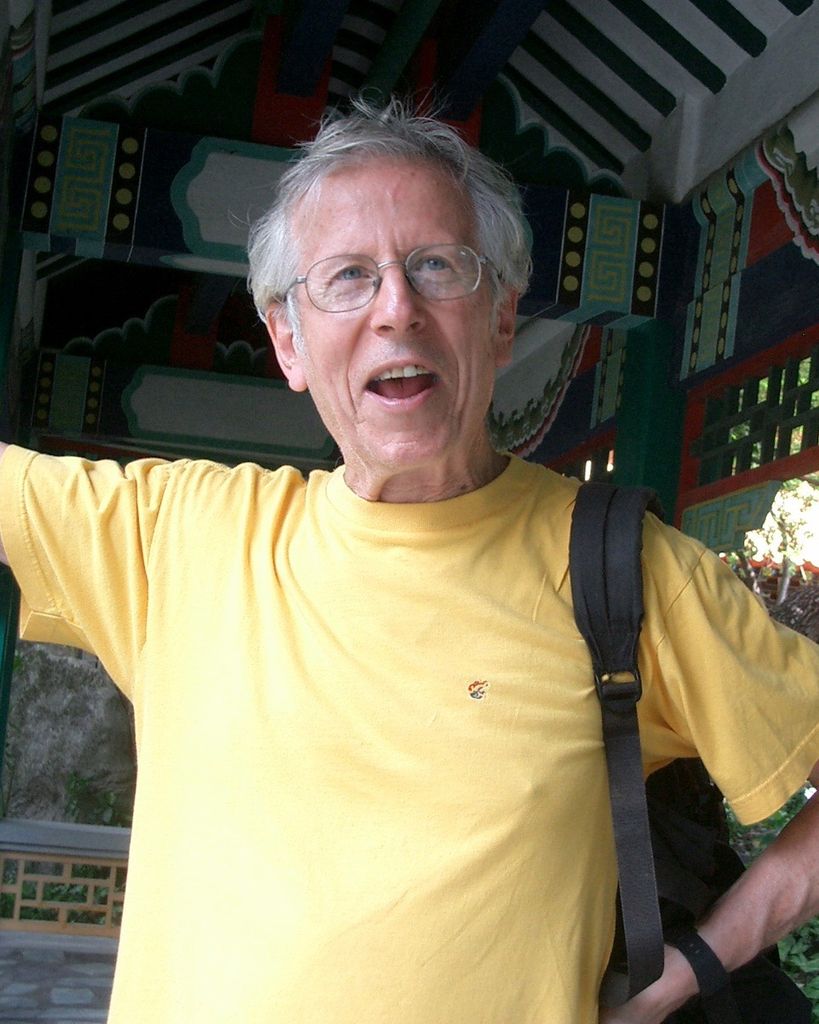


Robert S. Wyer, Jr.
Apr 18, 1935 — Feb 3, 2026
Anderson Township, Ohio
Robert “Bob” S. Wyer Jr.—or, when medical professionals asked his name too many times, “Alphonso”—passed away on February 3, 2026. He is survived by his wife, Rashmi; his son, Mikul; his two daughters, Natalie and Kathy; his grandson, Colin; his brother, Peter; his sister-in-law, Judith; his mother-in-law, Sally; and innumerable students and friends scattered across the world.
Bob was born in upstate New York in a small town called Delhi on April 18, 1935. Even at ninety, he retained both an irascible wit and the joie de vivre of a young man in his twenties. He often reminisced about an early childhood memory—how his mother would attach him to a clothesline in the front yard so he could roam at playtime without straying too far. Yet his boundless thirst for knowledge and experience proved impossible to restrain. Bob believed, above all, that the world and its people are endlessly interesting, and that a good life is one spent exploring both as fully as possible. This conviction animated every domain of his personality—from the intimate to the intellectual.
Food was one of Bob’s most personal avenues of exploration. His family knew him as an adventurous eater, though in his early life he was anything but. During his youth, wartime meatloaf left a permanent scar on his culinary psyche; he remained suspicious of it for the next eighty years. He championed the “typewriter” method of eating corn on the cob, believing other approaches “sociopathic.” His first encounter with real flavor came at a Chinese restaurant in New York City. Confronted with a vast array of delectable new choices, from mapo tofu to xiao long bao, he ordered: steak. Steak with mustard and powdered sugar was, after all, a rare childhood delicacy—just one component of his outstanding culinary repertoire. The other component was a mixed vegetable stir-fry. After sampling other dishes, however, Bob became enamored with trying new foods, ranging from lamb rogan josh to centipede on a stick. Relatedly, despite his generally anti-capitalist values, Bob expressed throughout his life a profound enthusiasm for various brand-name antacids; his daughters have cats named Alka, Seltzer and Tums, and his favorite lullaby to sing to his son was adapted from an old Brioschi antacid commercial.
Of course, Bob found it necessary to compensate for an essentially bottomless stomach with something less “sedentary.” In middle school, his interests expanded toward athletics: mainly, swimming (at which he was talented) and baseball (at which he was untalented, but a Dodgers fan nevertheless). In high school, he was an excellent cross-country runner and sportswriter, and eventually began a brief yet illustrious career in table tennis. His highest achievement came during a trip to a New York City ping pong den with his brother, where he took a game off the legendary national champion Marty Reisman. Bob’s status as an “Energizer bunny” continued into his eighties; he completed five-milers ad nauseam with Herculean gusto, swam long distances regularly, and remained an avid fan of the greats. By the greats, he typically meant Roger Federer, whose eventual fall from world number one he deemed symbolic of everything wrong with modern society. A routine solver of thousand-piece jigsaws, Bob eventually transitioned into the role of an exceptional tic-tac-toe strategist and New York Times puzzler. His Wordle streak topped out at 124, and he firmly believed Connections ought to be removed from the World Wide Web. He would like everyone to know that, despite tragically losing to his son in Backgammon the last time they played, their record is still dead even; he will “take the kid to the cleaners” in the next life.
Behind Bob’s fiercely competitive exterior lay a delicate sensibility for artistic curation; his mother, Wilhelmina Sebesta, was a part-time theatre director, and his father, Robert S. Wyer Sr., was a locally renowned photographer. A jazz clarinetist and choir boy in his youth, Bob grew into a cross-genre art collector—his visual art gallery included originals by Pablo Picasso and Edouard Cortes. To these, he added his own ventures into the discipline—abstract doodles, eventually painted with acrylic, that embody his whimsical soul. In addition, an army of stuffed toys, acquired over the past thirty years, occupies his Urbana home. Bob’s most well-known collection, though, is the still-expanding “Library of Congress,” which consists of two full basements lined essentially wall-to-wall with hardcover books. Over his lifetime, he certainly read thousands of novels, particularly enjoying the work of Don DeLillo and Philip Roth. More recently, he (at his son’s insistence) gained an appreciation for speculative fiction through Cixin Liu’s The Dark Forest trilogy. He leaves a standing challenge to literary editors everywhere: please, give us a story with an actual plot.
Further, as a lifelong movie buff, Bob gravitated toward what his wife liked to call “sad sack movies,” favorites of which included The Shawshank Redemption (1994) and Parasite (2019); the last great comedy, in his opinion, was Dr. Strangelove (1964). Perhaps his most notable cinematic achievement was binge watching the entirety of 24 nine times over the course of one month, emerging temporarily convinced of imminent threats to national security. For Bob, a certain traditionalism was crucial to appreciation; he forwent the capitalistic witchcraft of Netflix in exchange for DVDs and bootlegged cassette tapes. Indeed, as one of the last members of the resistance against “newfangled contraptions,” he began to use microwaves only in his sixties (and reluctantly at that); his misgivings perhaps stemmed from the reduction of his typing speed to 10 wpm, due to the jarring but necessary transition from a manual typewriter to a computer. His tumultuous relationship with Siri and Alexa, who repeatedly refused his Christmas morning requests to play “Jingle Bells,” remains unresolved.
Bob’s appreciation for the humanities and arts (and perhaps his distaste for novel technology) was in fact the catalyst for his transition from electrical engineering to psychology. Despite his being dubbed in a tabloid piece as “the university professor who received $100,000 for telling dirty jokes,” his influence on psychological research over the past fifty years is ubiquitous. Having worked at Bell Labs prior to his PhD, he brought the sensibilities of an engineer to the field: by the 1980s, he was “the father of social cognition,” the first advocate of a general perspective that has become foundational to modern social and consumer psychology—namely, the integration of cognitive science and information processing models into the study of social judgement. He became known for his ability to make accurate and insightful predictions about complex three or four-way interactions through systematic flowcharting of many possible pathways—a playful and adventurous, yet incredibly rigorous approach to his science that quickly took root in the cultural milieu. Later, in the Hong Kong University of Science and Technology’s marketing department, he expanded into consumer research, helping transform the field across Asia while never relinquishing his skepticism of corporate excess. During his time there, Bob also contributed to numerous handbooks on cultural behavior. His scholarship brought psychology to a new level of theoretical, methodological, and empirical sophistication.
Yet Bob is perhaps most esteemed as a teacher and editor. He considered the most personally rewarding experience he ever had as a psychologist to be his famed Social Cognition Group at the University of Illinois at Urbana-Champaign—a group that has influenced eminent scholars across a variety of fields. There is perhaps nothing more emblematic of who Bob was than the SCG—an informal afternoon gathering of scholars that facilitated the exchange of ideas about social judgement phenomena within an information processing framework. After meetings, most of the group adjourned to a local pub for beer and nachos as a prelude to dinner. At night, some gathered in Bob’s basement to compete in his beloved board games—from Go to Scrabble to backgammon. But after everyone had left, Bob stayed awake into the wee hours—his feet up on his desk—and wrote voluminous memos analyzing presented work on his typewriter. After manually cutting-and-pasting over any errors, he mailed them off to his students. These memos remain among the most profoundly insightful documents in the history of psychology. Bill McGuire—whom Bob considered the greatest social psychologist of all time—once remarked that they sometimes “deserved publication more than the manuscripts he was laboring to improve.” Indeed, they gave rise to several dissertation topics and directions for future investigation that have had a vast impact on the modern state of psychological research. Bob’s efforts brought together, supported, and energized a lifelong community of scholars around creative ideation and thorough critique. He is remembered by this community not only for his extraordinary generosity and incredible depth of insight, but for his endless curiosity and passion for people—in research and in friendship.
Moreover, these qualities were unbounded by institutions; they came together in his frequent gallivanting through foreign countries. He ventured through Europe in the 1970s, and Africa and Southeast Asia years later. He considered backpacking trips through the latter two—in 1988, 1992, and 1997—to be by far the most profound experiences of his life, as they instilled in him a deep appreciation for the small beauties that make up existence. They also instilled in him a complicated relationship with the serpentine: fearless before his brother’s six-foot indigo snake, yet once content to leave his wife with a juvenile cobra while he ran for help. The most wondrous scene he ever encountered—one he turned to in times of trouble—was that of an evening wildebeest migration in Amboseli National Park, Kenya. He always chased sunsets instead of “the bag”—ever-willing to climb literal mountains for a more colorful view of the world. In fact, he completed the Annapurna circuit by himself with no guidance, and nearly summited Mt. Kenya in the spirit of a pleasant afternoon walk. His writings on these times capture culture with precision, humility, and awe, reflecting the passion for history that pervaded the last thirty years of his life.
Yet for all Bob’s appetite for the world, what mattered most to him was how he showed up for the people closest at hand. Indeed, Bob should perhaps be most remembered for his incredible capacity for care. A civil-rights, anti-war, and pro-environment advocate for decades, he was insistent on philanthropy. He made others’ research his highest priority, donated massive boxes of personally recommended books to colleagues and friends, and occasionally locked his friends in restaurant bathrooms so he could foot the bill. He was perhaps fundamentally incapable of not loving others. Through small acts of support, he lifted his family’s spirits when the going got tough; he cajoled doctors so his inpatient-bound wife could attend a concert, cured headaches with “magical healing hands”, and dispensed daily advice on the drive to school and back. Bob lived as if the world were a glorious place, to be attended to, argued with, and delighted in. It is this perspective that he leaves us with: look out at that world, and all the people in it. Understand them. Recognize their beauty. Give them the love he gave us.
To remember him, we ask that you plant a tree, save an animal, or raise a toast at sunset. He would probably like the flowers to remain in the garden.
Guestbook
Visits: 1538
This site is protected by reCAPTCHA and the
Google Privacy Policy and Terms of Service apply.
Service map data © OpenStreetMap contributors
* This obituary is protected against unauthorized reproduction or redistribution without the family's or funeral home's written consent. *